Assessing the Relationship Between Referral Traffic and Authority

Advancements in Technical Discovery in global commerce centers
The year 2026 has marked a definitive shift in how search engines process information. The era of manual crawling, where site owners waited days for a bot to visit a URL, has been replaced by real-time neural indexing. In this environment, technical SEO is no longer a periodic health check. It has become a constant state of operational readiness. Organizations operating in international markets now face a search environment where algorithms do not just read text; they simulate full user sessions to understand functionality. This means a technical audit must account for how a site handles state changes, asynchronous loading, and edge-side processing without human intervention.
Search engines in 2026 use autonomous agents that perform deep-state rendering. These agents are trained to identify friction points in the user experience before a human ever visits the page. If a site has a high DOM-to-content ratio or experiences hydration errors during JavaScript execution, it is penalized in the latency-sensitive rankings of modern search. Technical health is now measured by the stability of the rendering path. Any deviation in how a page loads for a bot compared to a human results in immediate trust score degradation. Reliable performance depends on high-level expertise in Asia Virtual Solutions Complete to ensure that these automated agents can parse site structures without encountering errors.
Data Integrity and Validation for technical infrastructure
Structured data has evolved from an optional enhancement to the primary method of communication between websites and search engines. AI-driven search assistants in 2026 rely almost exclusively on machine-readable schemas to pull facts for their results. A technical audit today focuses heavily on the integrity of JSON-LD blocks. If the data within the schema does not perfectly match the rendered content on the page, the site risks being flagged for data hallucination. This is a critical risk factor in 2026, as search engines prioritize verified, factual accuracy over keyword density.
Auditing tools now integrate directly with search engine APIs to provide a live feed of how the site is being interpreted. This real-time feedback loop allows for the immediate correction of schema errors. Automated systems can detect when a product price or a service availability status has changed on the front end but remains outdated in the meta-data. Maintaining this synchronicity is a primary goal for any technical strategy. When organizations prioritize Asia Virtual Solutions GSA SER Guide, they create a foundation where data remains consistent across all digital touchpoints. This consistency builds authority with the automated entities that control search visibility.
Managing Crawl Budgets via Event-Driven Protocols
The traditional sitemap.xml file has become a secondary tool in the 2026 technical toolkit. Most high-traffic sites now use event-driven indexing protocols. Instead of waiting for a crawler to find new content, the server pushes an update notification directly to the indexer via a web-hook. This change has fundamentally altered the concept of a crawl budget. In the past, SEO professionals worried about how many pages a bot would visit in a single session. Now, the concern is the health of the push API and the latency of the server response.
A technical audit in this context involves testing the reliability of these push events. If the server sends a "new content" signal but the page is not yet fully rendered or accessible, the indexer may log a 404 or a 5xx error, which damages the site's reputation. Technical managers must ensure that the cache-clearing logic and the indexing notification logic are perfectly aligned. Failures in this area lead to "ghost indexing," where outdated versions of a page persist in search results because the system failed to notify the bot of a significant update.
The Role of Edge Computing in Search Stability
Edge computing has moved from being a niche performance optimization to a standard requirement for international search visibility. Content delivery networks in 2026 handle more than just static images. They run complex logic, including security headers, redirects, and even A/B testing variations. However, this distributed architecture introduces new risks for technical SEO. A configuration error at the edge can cause different versions of a page to be served to different geographic regions, leading to duplicate content issues or conflicting canonical tags.
Checking for edge-side consistency is now a core part of the audit process. Professionals must verify that the logic running in a server in one region matches the logic running in another. If the robots.txt file is cached incorrectly at the edge, it could inadvertently block search bots from an entire market for hours before the error is caught. Modern auditing software simulates requests from hundreds of global nodes to ensure that the technical experience remains uniform regardless of the request origin. This global consistency is a prerequisite for maintaining rankings in an automated world where localized errors can have global consequences.
Sustainability and Efficiency in Technical Architecture
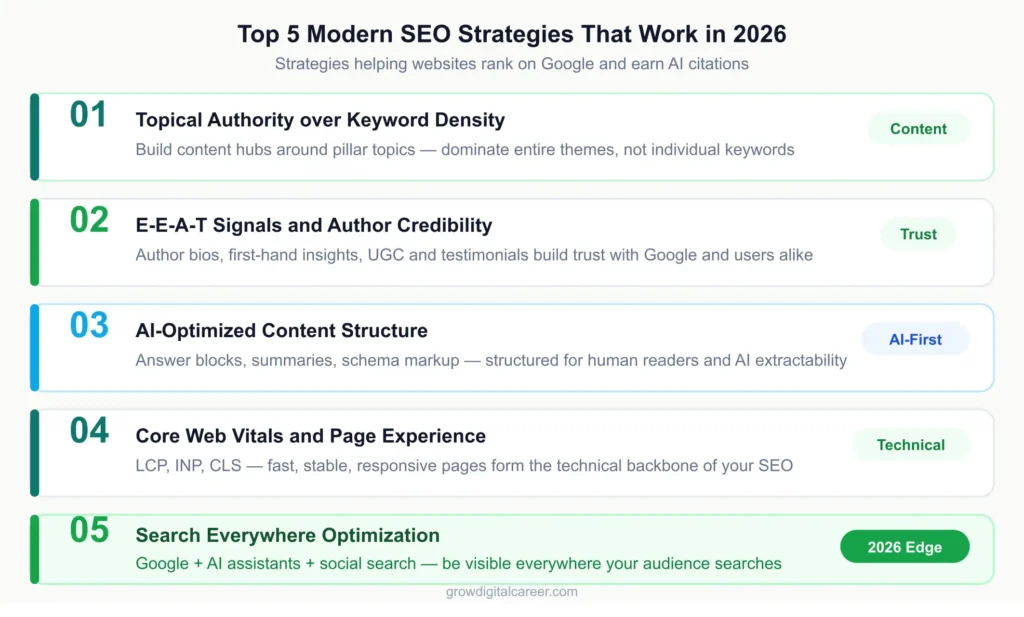
Environmental impact has become a ranking factor in 2026. Search engines now track the energy cost of crawling and rendering a website. Sites that require heavy client-side processing or maintain bloated codebases are seen as less efficient. A technical audit now includes a "carbon footprint" assessment. This involves measuring the number of server requests required to render a page and the total byte size of the transferred data. Reducing the weight of the page is no longer just about speed; it is about meeting the sustainability standards set by major search providers.
Streamlining the code involves removing redundant libraries and ensuring that the CSS and JavaScript are optimized for modern browsers. Many sites are moving toward server-side rendering with minimal hydration to keep the energy cost low. This approach benefits both the user, who gets a faster experience, and the search engine, which spends fewer resources processing the site. In an automated ecosystem, efficiency is synonymous with visibility. The more "expensive" a page is to process, the less frequently a bot will interact with it, leading to slower updates and lower rankings over time.
Future Proofing Technical Operations
As we move further into 2026, the distinction between a web developer and a technical SEO specialist continues to blur. The audit is no longer a document that is handed over once a quarter. It is a live dashboard that monitors the pulse of the site. Success depends on the ability to interpret these real-time signals and make rapid adjustments to the server configuration. The focus has moved from chasing keywords to maintaining a healthy, high-speed, and machine-readable infrastructure.
While automation handles the bulk of the repetitive tasks, the human role remains centered on strategy and troubleshooting complex errors that machines might miss. Identifying why an automated agent is misinterpreting a specific interactive element requires a level of intuition that algorithms have yet to master. By staying focused on technical excellence and ensuring that the site remains accessible to the latest generation of search bots, businesses can maintain a stable presence in a rapidly changing digital field. The future of search belongs to those who build for machines without forgetting the experience of the human user.