Your Blueprint for Gradual and Permanent SEO Growth

Adapting to Autonomous Discovery in 2026
Search behaviors in 2026 have moved far beyond the simple entry of text into a box. Most digital queries now originate from autonomous agents—software assistants that summarize, compare, and execute tasks on behalf of users. These agents do not browse websites the way humans do. Instead, they scan for specific data points, factual accuracy, and machine-readable structures. Maintaining visibility in this environment requires a departure from old methods of keyword density in favor of high-fidelity data feeds and entity-based optimization.
Automation in search marketing is no longer a luxury for large corporations. Smaller players in the global market are finding that without automated content maintenance and real-time data updates, their digital presence vanishes from agent-driven results within hours. The speed of information decay has accelerated. What was true yesterday regarding stock, pricing, or service availability is considered obsolete by noon today. Systems that manually update meta descriptions or headers once a month cannot compete with the algorithmic speed of 2026.
Data Structures and Agent-Centric Optimization
The current year has seen a massive shift toward "Agentic SEO." This involves preparing information specifically for Large Language Model (LLM) crawlers that act as gatekeepers for consumer information. These crawlers prioritize structured data over prose. While a human might enjoy a well-written paragraph about professional search solutions, an AI agent looks for the underlying schema.org markup that defines prices, availability, and geographic service areas.
To maintain a sustainable ranking, businesses are moving away from bloated HTML structures. Lightweight, API-driven content delivery has become the standard for those seeking long-term success. If a search engine cannot parse the core facts of a page in under 50 milliseconds, it often moves to a more efficient source. Reliability and speed are the primary metrics for authority in 2026. Organizations that prioritize these technical aspects over superficial design choices tend to hold their positions more effectively.
The Role of Verified Authority in Automated Rankings
Trust has become the most expensive currency in the digital world. With the explosion of synthetic content, search engines have implemented stricter verification protocols. In 2026, an automated ranking strategy is only as good as the verified credentials behind it. This is often referred to as "Entity Validation." Search engines now cross-reference information across multiple government databases, social proofs, and third-party citations to ensure a business is legitimate.
Focusing on GSA Search Engine Ranker Discount provides a way to align with these validation requirements by ensuring consistent data across all touchpoints. When an agent finds the same verified facts about a business on a hundred different reputable platforms, the confidence score for that entity rises. This confidence score is what determines whether an AI assistant recommends a service or ignores it. High-volume content creation without this underlying verification often results in a "shadow ban" where content exists but is never surfaced in AI summaries.
Sustainable Growth Through Real-Time Feedback Loops
Sustainability in search marketing now depends on the ability of a system to learn from its own performance. Static strategies fail because the algorithms governing the digital environment update themselves daily. Leading marketing departments now use closed-loop automation. These systems monitor which pieces of content are being cited by AI agents and which are being ignored. If a specific technical guide or product page is not being picked up, the system automatically adjusts the underlying data structure or internal linking to improve visibility.
This approach requires a shift in how marketing budgets are allocated. Instead of paying for one-off campaigns, successful firms invest in the technical infrastructure that supports constant adaptation. The goal is to create a digital asset that maintains its own health. For instance, if a competitor updates their pricing or a new regulation is passed in the international sector, an automated system can adjust the relevant documentation across thousands of pages instantly. This ensures the brand remains a "source of truth" for search engines.
Managing search strategies in 2026
The complexity of modern search means that human intervention is increasingly reserved for high-level strategy rather than execution. Modern automated marketing involves the orchestration of multiple AI models to handle different parts of the search funnel. One model might focus on technical health, while another focuses on semantic relevance. This multi-model approach prevents the "hallucinations" that plagued earlier versions of automated search tools.
Using GSA Search Engine Ranker Discount as a central pillar of this strategy allows for better coordination between these various AI tools. When the underlying data is clean and the goals are clearly defined, automation produces a much more stable ranking than manual efforts ever could. It is about building a system that is resilient to the constant fluctuations of the 2026 search market. Those who rely on older, manual processes find themselves stuck in a cycle of constant catch-up, whereas automated systems can anticipate shifts in search patterns by analyzing vast amounts of real-time query data.
Technical Requirements for the Modern Search Engine
Server-side rendering and edge computing have become non-negotiable for search marketing. As crawlers become more demanding, the traditional method of loading heavy JavaScript on the client side has become a liability. To rank well in 2026, a site must deliver its content almost instantly from a location physically close to the crawler or the user. This geographic proximity is a key factor in the latency scores that search engines use to rank results.
Content must also be "headless." This means the information is stored in a format that can be easily pushed to a website, a mobile app, a voice assistant, or an AI agent simultaneously. When information is tied too closely to a specific visual layout, it becomes harder for automated systems to extract the value. By separating the data from the presentation, businesses ensure their information remains accessible no matter how the user chooses to search.
The Importance of Semantic Connectivity
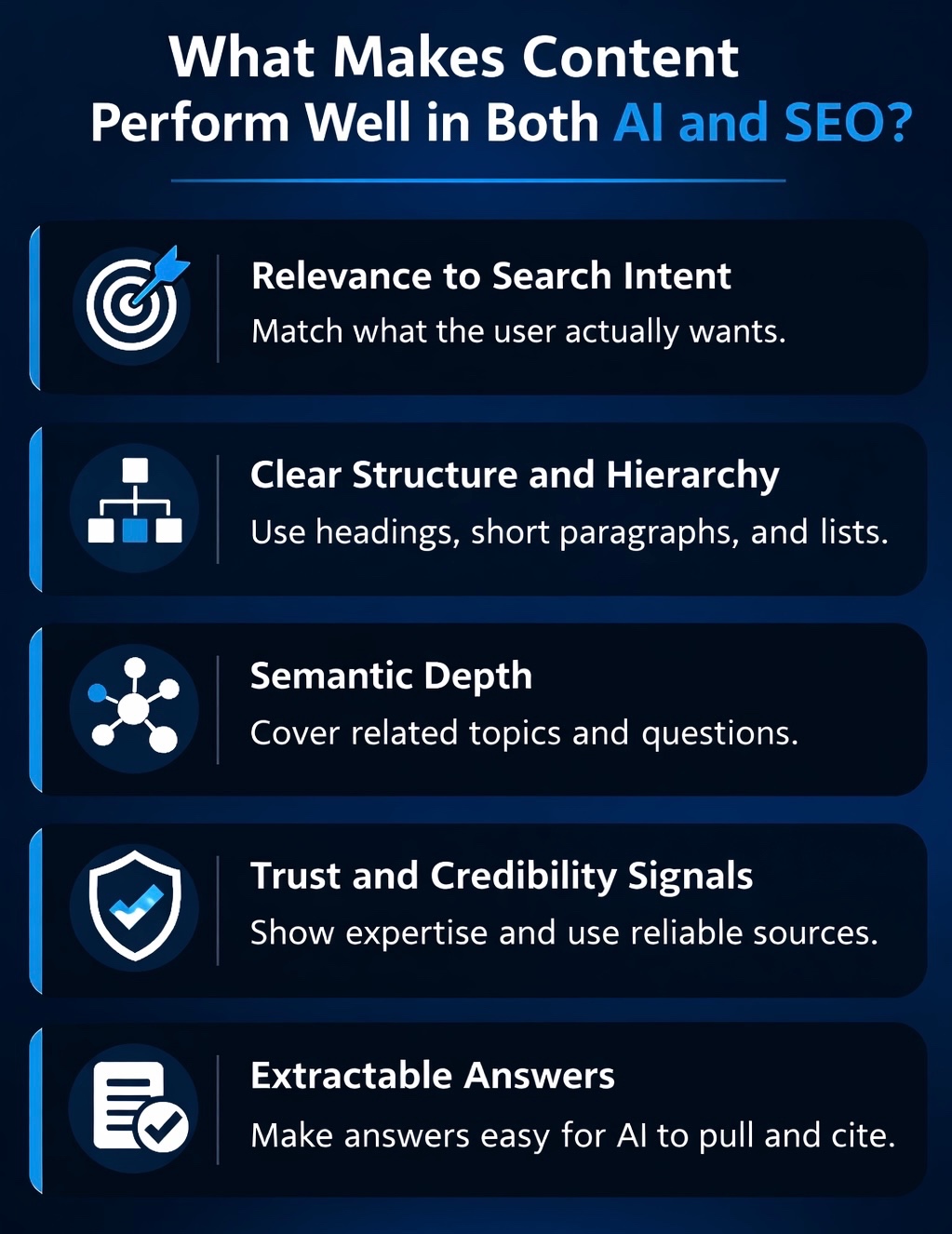
Keywords are no longer the primary way search engines understand a page. Instead, they look for semantic clusters—groups of related concepts that show a deep understanding of a topic. If a site discusses digital marketing, the search engine expects to see a web of related topics like data privacy, machine learning, and user intent. An automated strategy ensures that these connections are made clear through internal linking and related content modules.
This connectivity helps search engines build a "knowledge graph" around a brand. When a brand is at the center of a strong knowledge graph, it is seen as a leader in its field. This status provides a significant buffer against algorithm updates. While a single page might drop in rank, the brand's overall authority remains high because the search engine understands its place within the broader context of the industry.
Future-Proofing for 2027 and Beyond
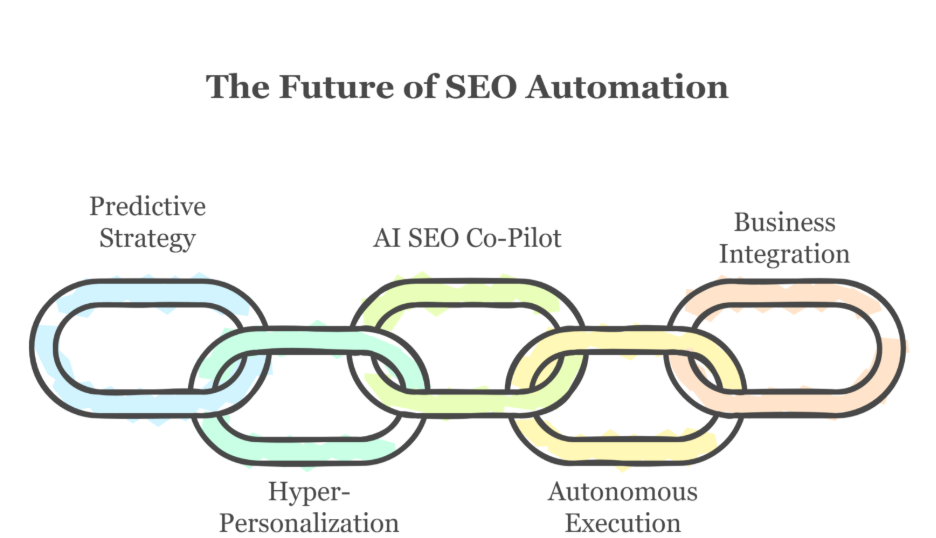
Looking toward the end of the decade, the trend toward total automation shows no signs of slowing down. The most successful organizations are those building "self-healing" websites. These are platforms that can detect broken links, outdated facts, or declining engagement and fix them without human input. This level of automation ensures that the site is always presenting its best version to both humans and machines.
The focus is shifting from "how do we rank for this word" to "how do we become the definitive source for this topic." This involves a commitment to factual depth and technical excellence. In 2026, search marketing is less about persuasion and more about being the most useful and accessible source of information. By removing the friction between the data and the search engine, businesses create a sustainable path to the top of the results.
The current environment rewards those who embrace the reality of a machine-dominated search world. By automating the routine tasks of SEO and focusing on the integrity of their data, companies can ensure they remain visible to the agents and assistants that now drive the majority of global commerce. It is a time of precision, speed, and technical mastery. Those who adapt their strategies to match these 2026 realities will find that the new search market offers more stability and reach than the fragmented systems of the past.